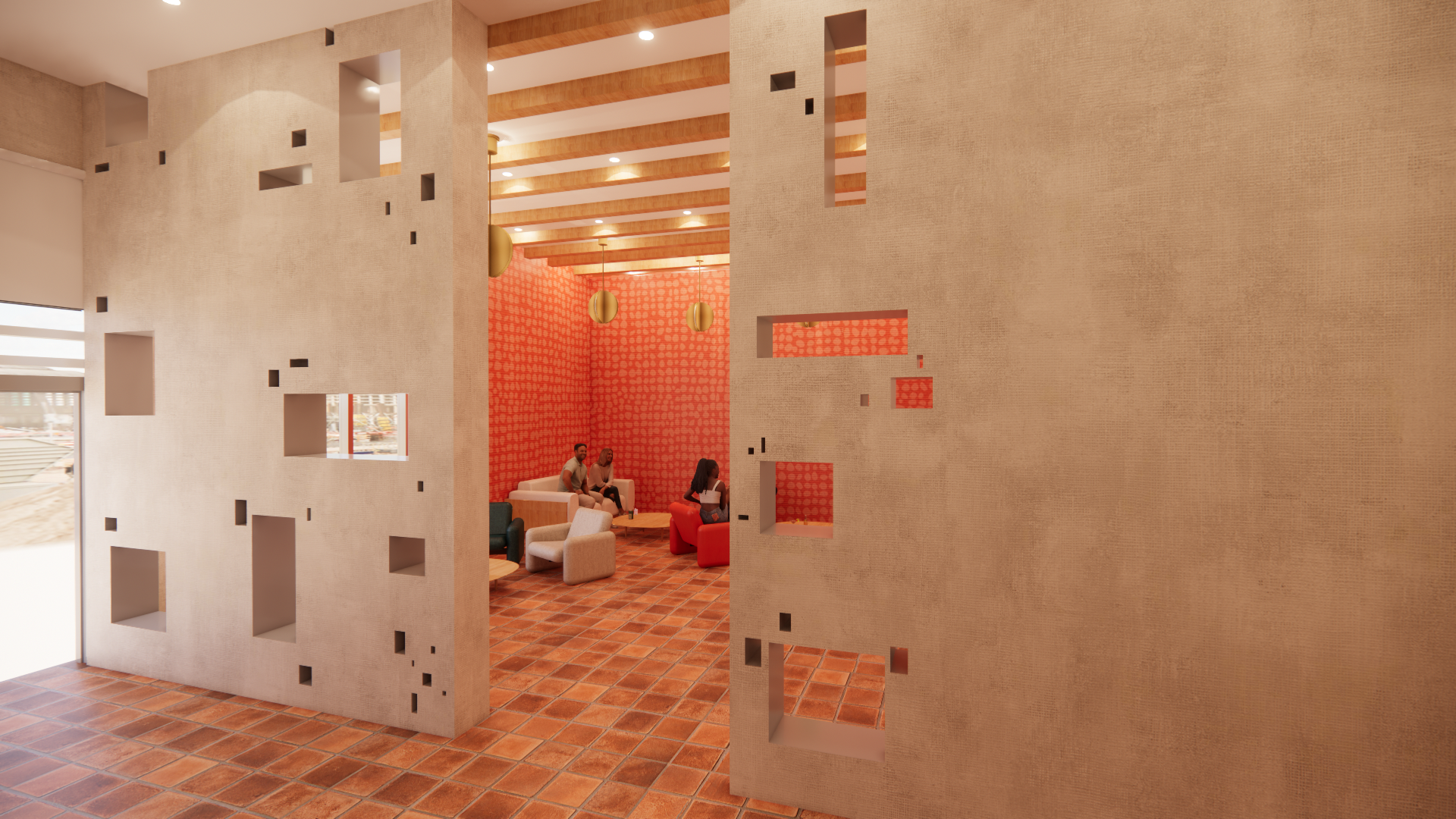
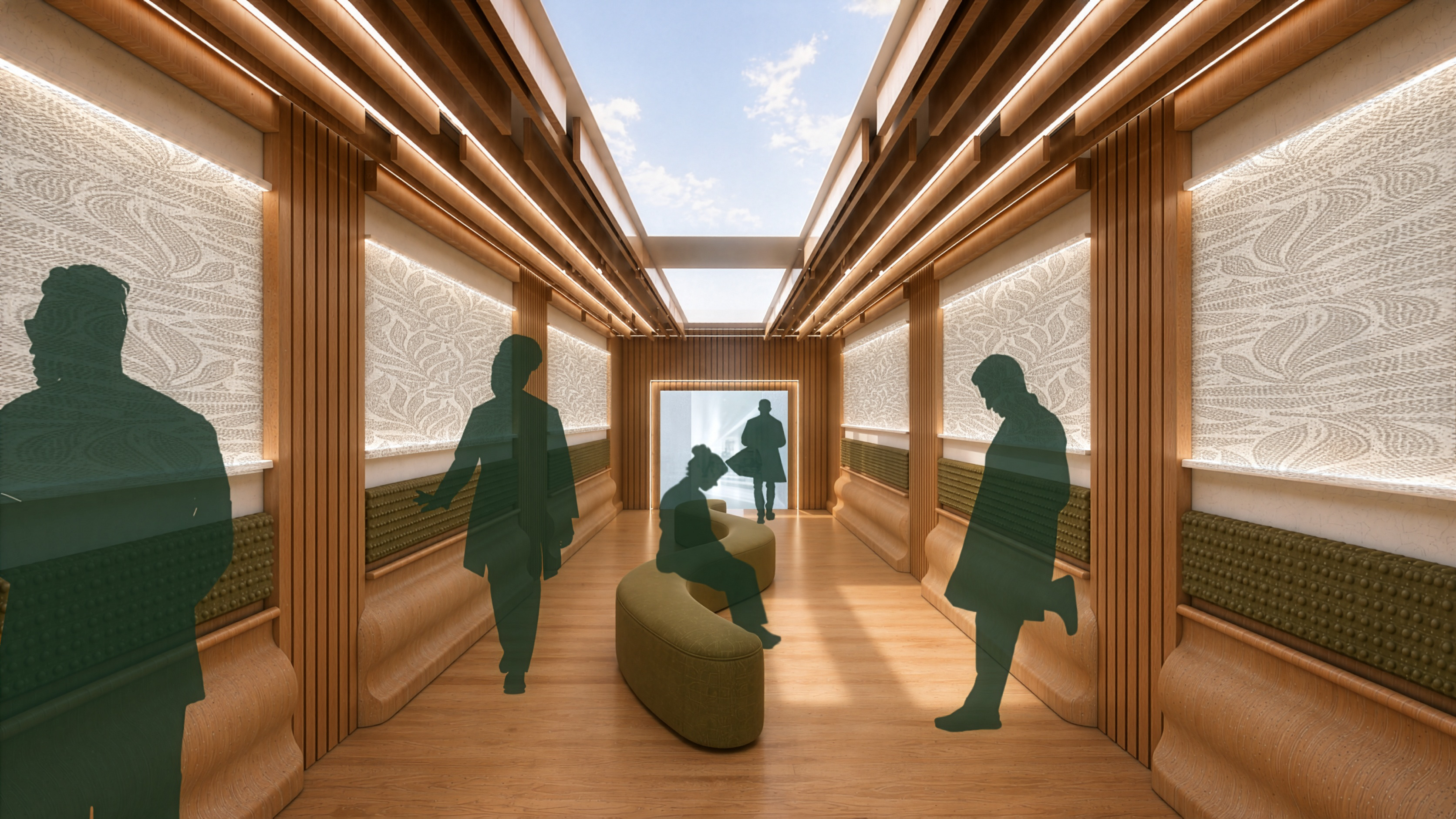
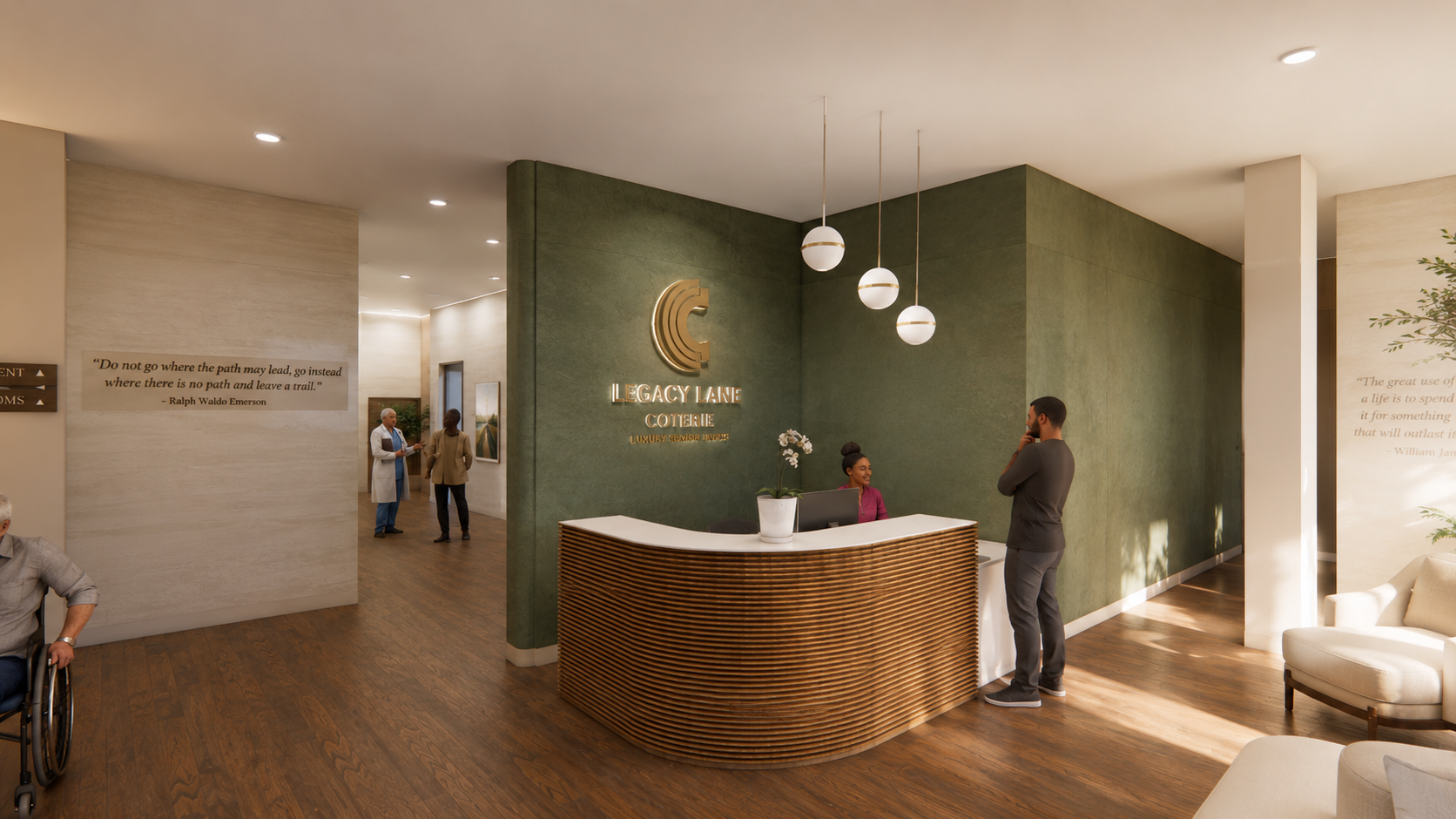
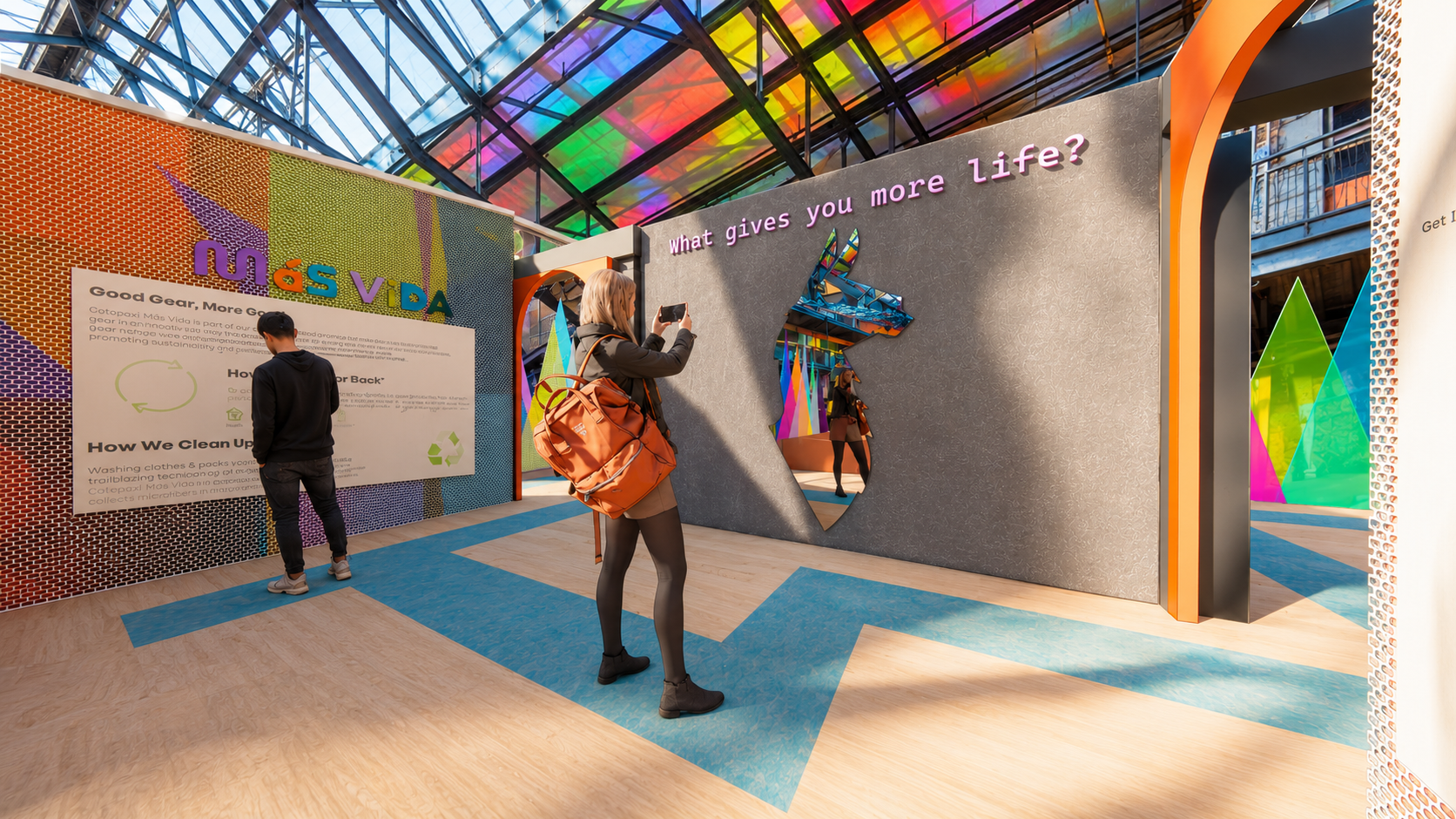
Third Place is a hospitality concept located in Wynwood, Miami, that examines the role of social environments in fostering community and belonging. Inspired by the idea of creating spaces "for locals, by locals," the project responds to the tension between tourism and local identity within rapidly changing urban districts. The design positions the venue as a modern third place—a setting outside of home and work where meaningful social interaction can occur. A centrally located circular bar serves as the heart of the space, surrounded by flexible lounge areas and a multipurpose cocktail studio that accommodates community events, classes, and gatherings. Drawing from Miami's cultural landscape, the material palette incorporates warm plaster, terracotta, natural stone, wood, and handcrafted tile to create an atmosphere that feels authentic, welcoming, and deeply rooted in place. Ultimately, the project demonstrates how hospitality environments can cultivate connection, reinforce local identity, and support community well-being.
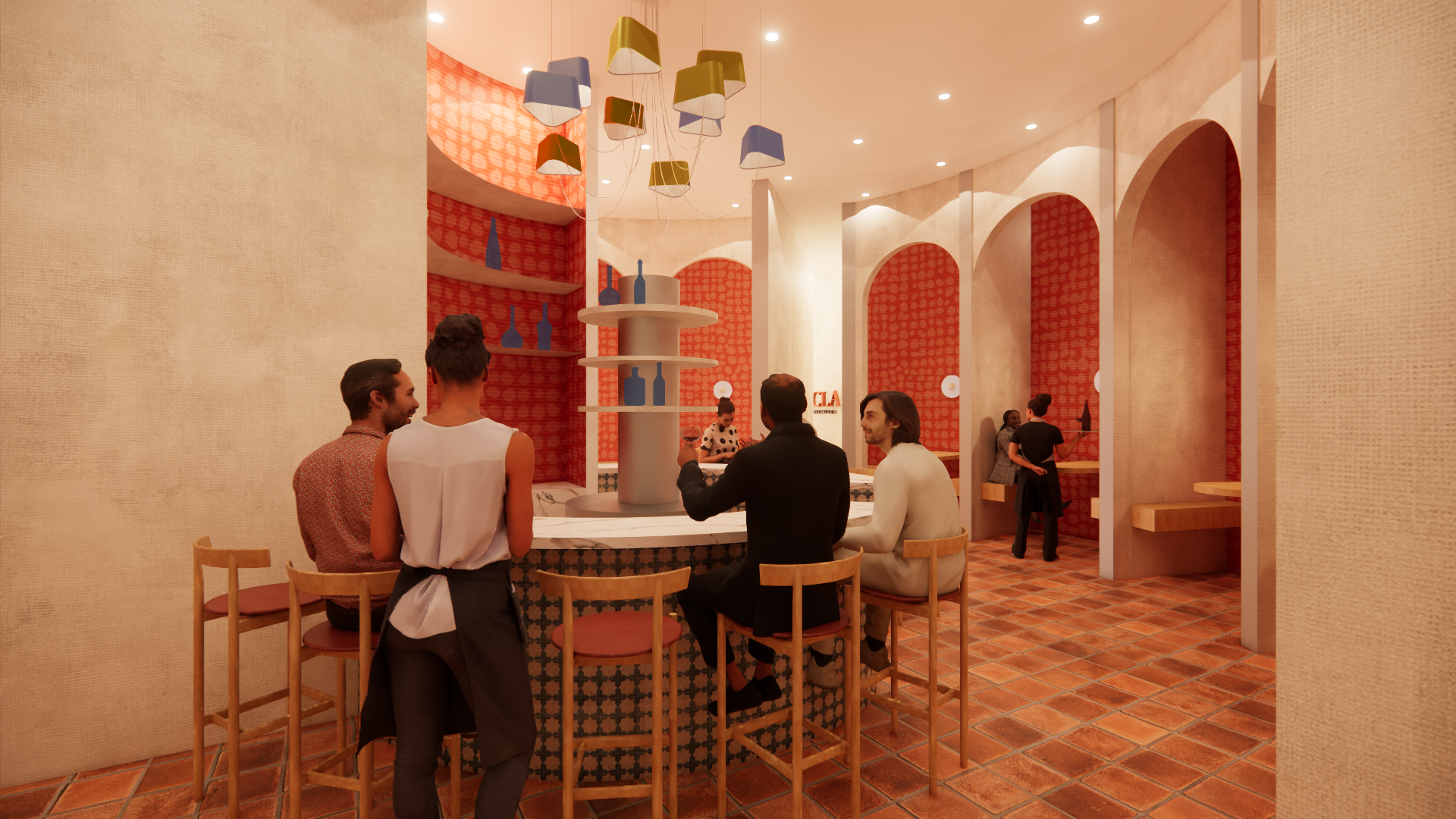
MAIN BAR
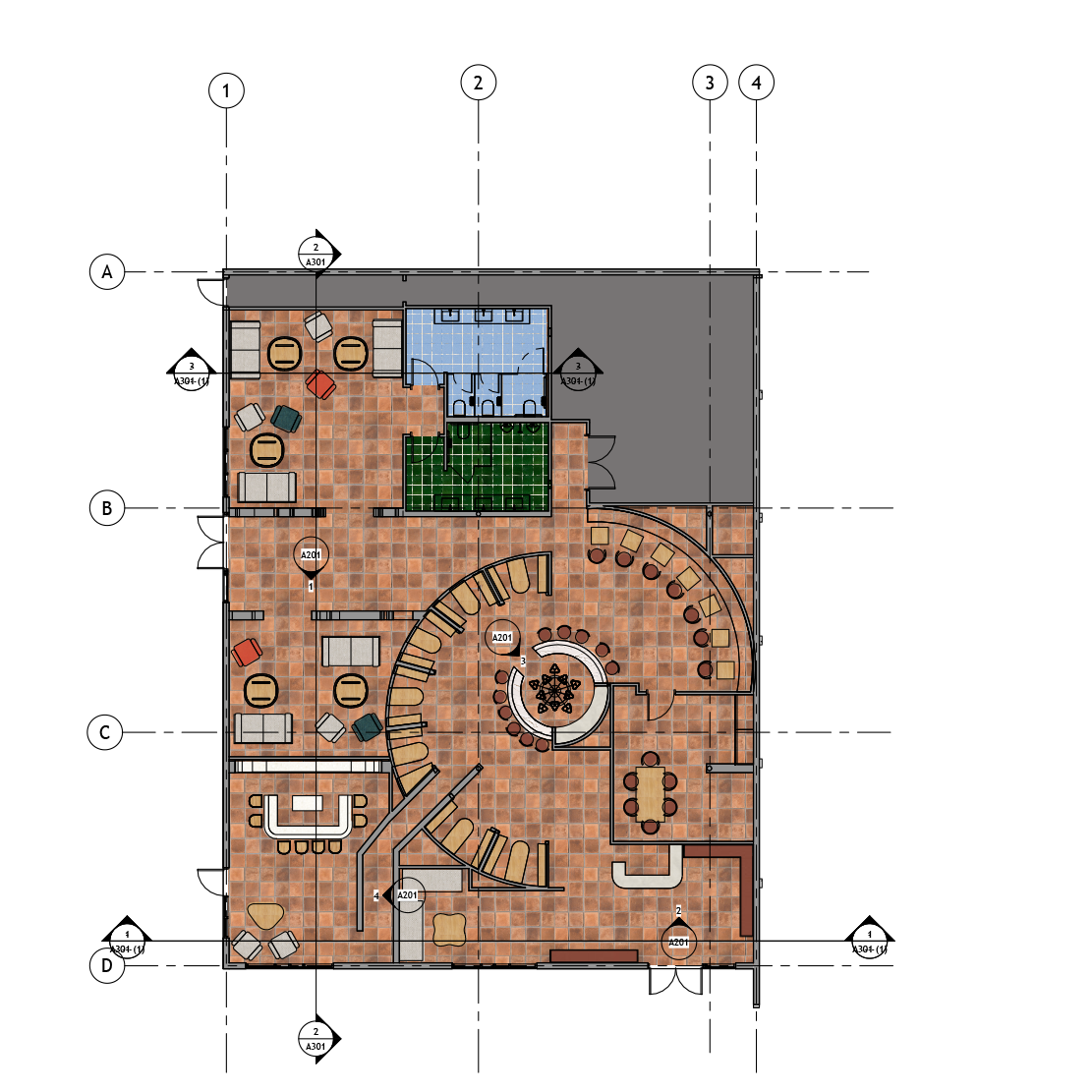
PLAN
The spatial organization of Third Place was designed to encourage both spontaneous interaction and intentional gathering. Anchored by a centrally located circular bar, the plan radiates outward into a series of interconnected seating zones that vary in scale and level of engagement, allowing guests to choose between lively social experiences and more intimate moments of retreat. Flexible lounge areas, communal tables, and a multipurpose event space support a range of activities, from casual conversations to organized community programming. The curved circulation reinforces a sense of flow and discovery, guiding visitors through the space while maintaining visual connections that foster inclusivity, interaction, and a strong sense of belonging.
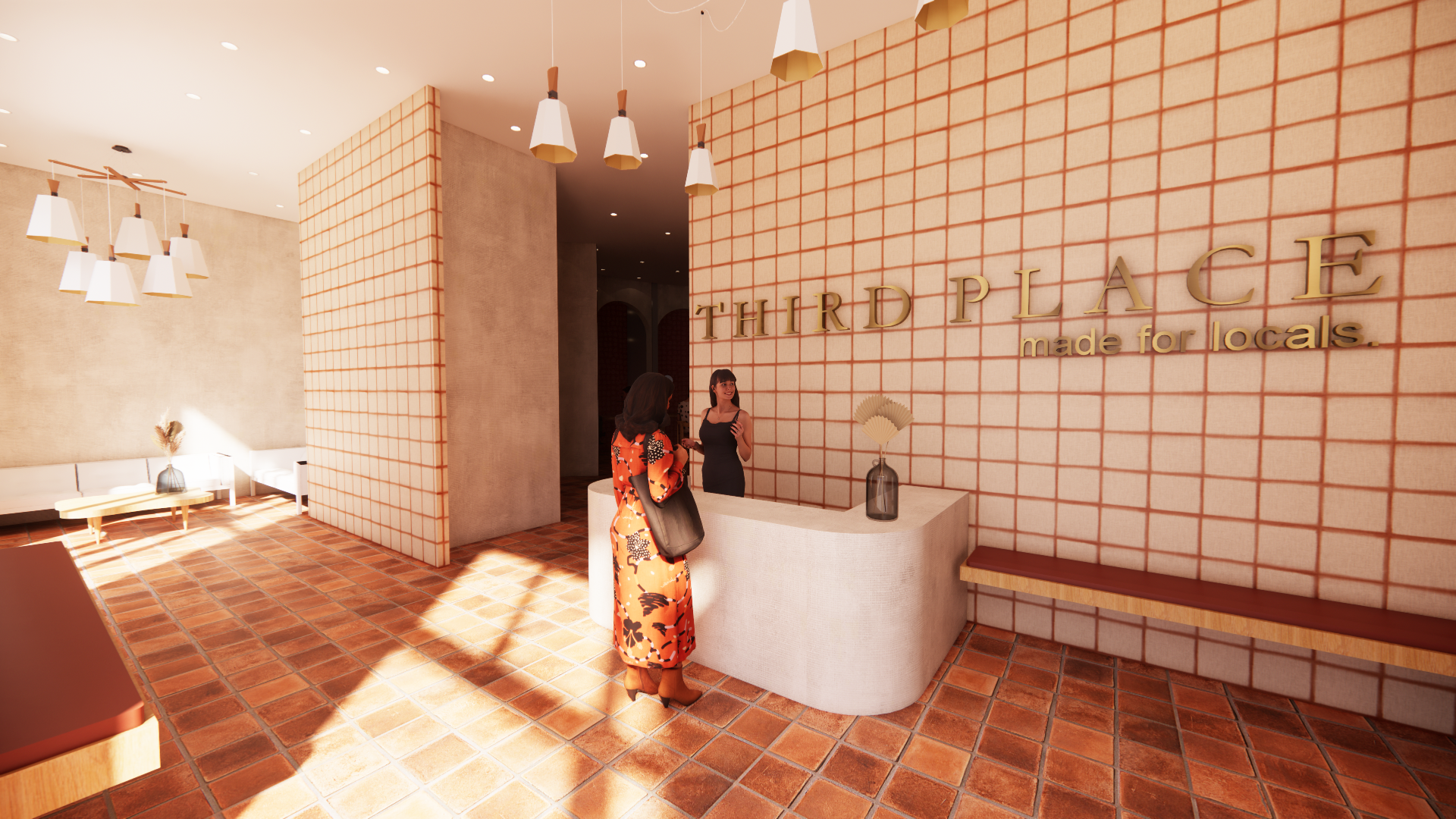
ENTRY
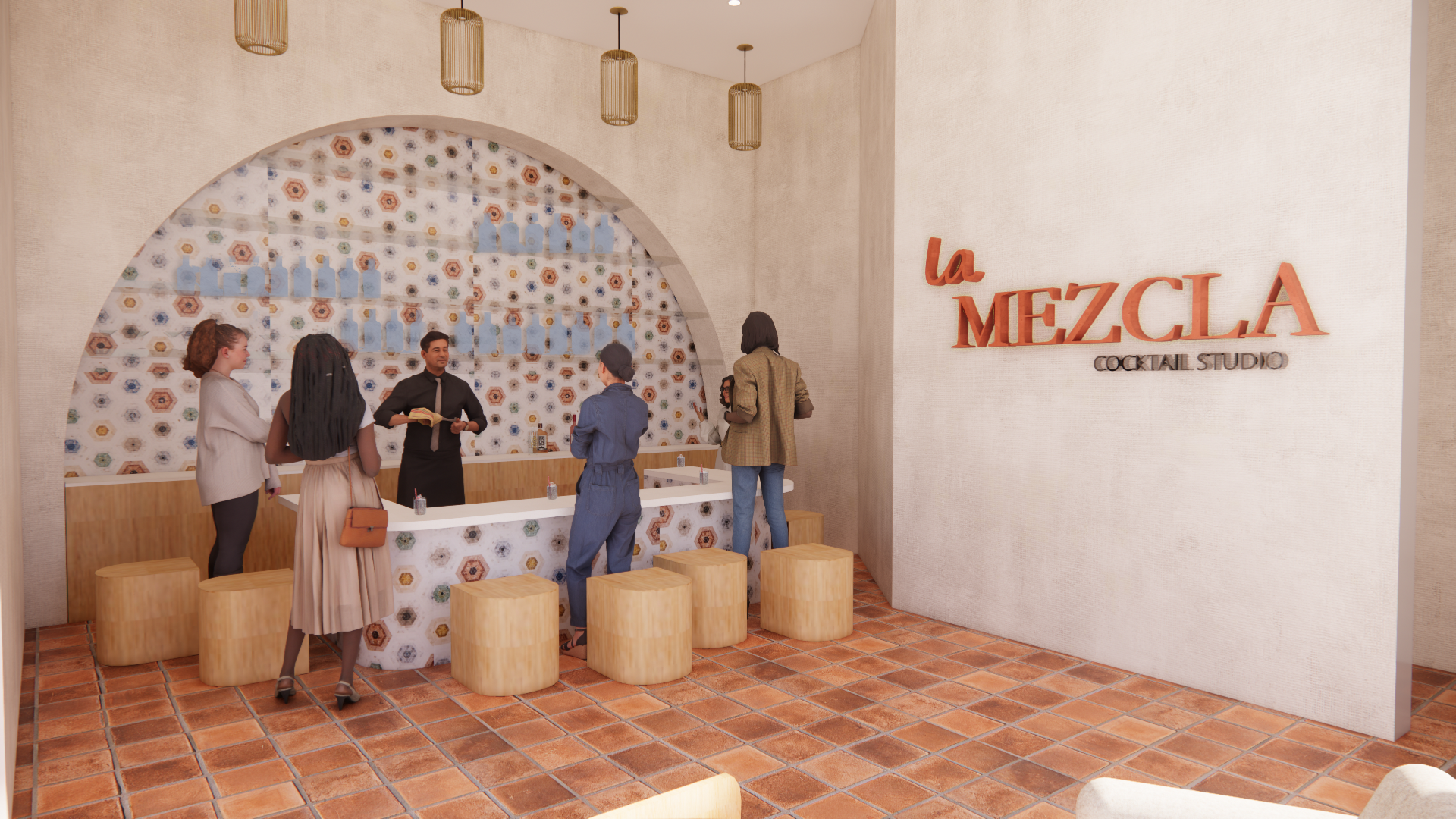
COCKTAIL STUDIO
renders
The renderings for Third Place were created through an iterative visualization process that emphasized both spatial experience and atmosphere. Revit was used to develop the architectural model and organize the design's material and furniture elements, while Enscape generated real-time visualizations that explored lighting, perspective, and user experience. The final renderings were then post-produced in Photoshop, where enhancements to tone, contrast, and environmental details helped convey the energy, warmth, and social character of the space.